ServicesTrailer Interchange Insurance
Trailer Interchange Insurance in Union City
If you pull trailers owned by another carrier or a steamship line under a signed interchange agreement, damage to that trailer is on you. We set up coverage that matches what your agreement requires and spell out the quote in writing before you sign anything.
What trailer interchange coverage does
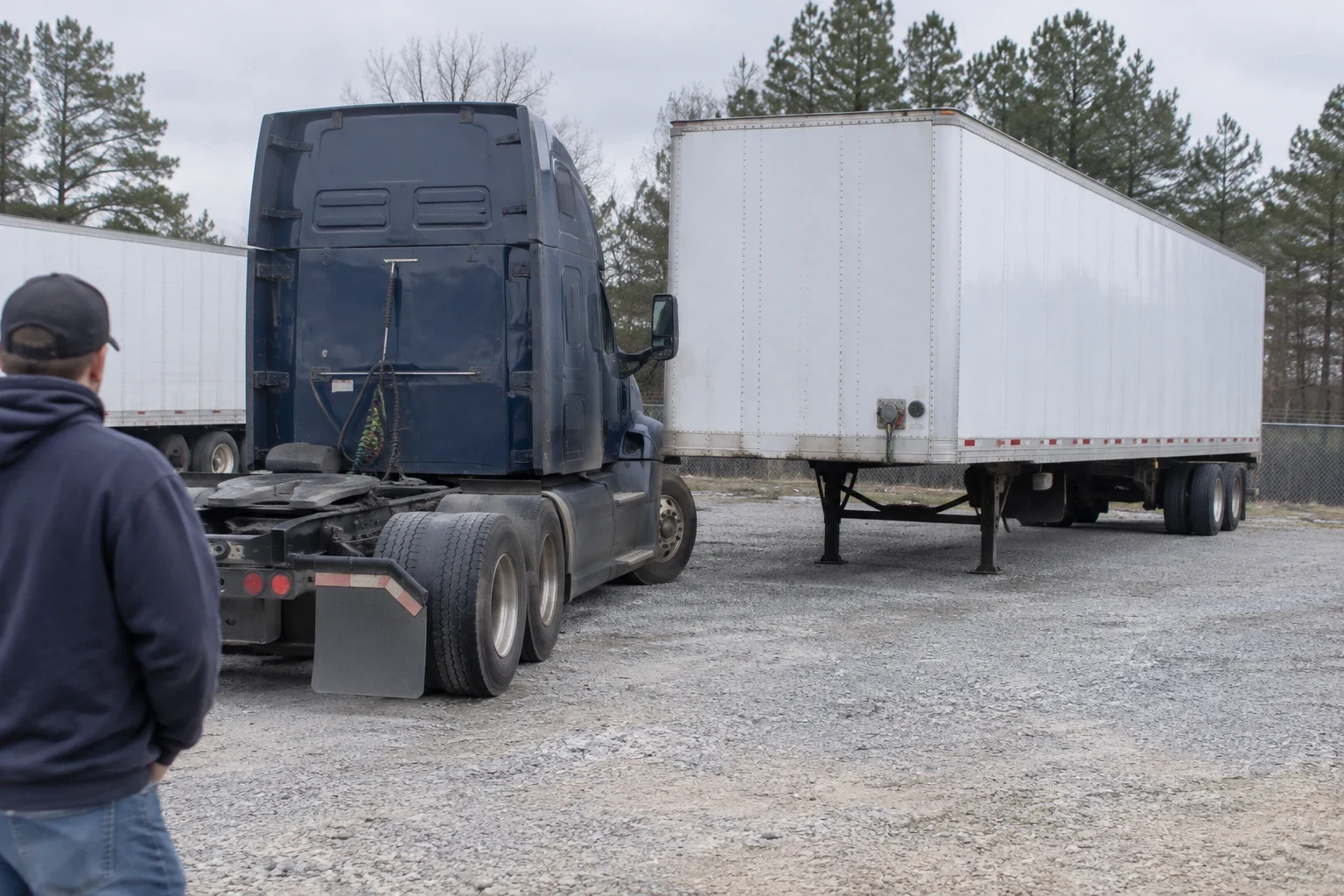
Trailer interchange insurance pays for physical damage to a trailer you don't own while it's in your care under a written interchange agreement. Think collision, fire, theft or vandalism while the trailer is hooked to your truck or parked in your yard. Your primary auto liability covers damage you do to others. It does not cover the trailer you're pulling.
The agreement is what matters. This coverage applies when there's a signed contract between you and the trailer owner, like the UIIA for intermodal work or a direct deal with another carrier. If you borrow or rent a trailer with no agreement, you usually need non-owned trailer physical damage instead. We'll look at your paperwork and tell you which one fits.
Most carriers we talk with around Union City and the south side of Atlanta run drayage, intermodal or swap loads with partner carriers. If that's your operation, this coverage usually isn't optional. The equipment owner will ask to see it on a certificate of insurance before you pull out.
What we set up for you
Agreement review
We read your interchange agreement or UIIA addendum and pull out the limits, deductible caps and any loss-of-use language. That way the policy matches what the trailer owner expects.
Physical damage limit
Coverage is set to a stated limit per trailer. We size it to the value of the trailers you actually pull, not a round number someone guessed at.
Loss of use where needed
Some agreements charge you a daily fee while a damaged trailer sits in the shop. If yours does, we look for a policy that can pick that up and show you the cost up front.
Certificates of insurance
Equipment providers want proof before they release a trailer. We issue certificates naming the right parties so you aren't held up at the gate.
Fit with your other coverage
We check how this sits next to your primary auto liability, physical damage insurance on your own truck and motor truck cargo insurance, so nothing overlaps and nothing is missing.
Signs you need this coverage
You signed an interchange agreement
Any signed agreement that makes you responsible for another party's trailer is a strong signal. Read the insurance section. It often names a required limit.
You're starting intermodal or drayage
Ports, rail ramps and steamship lines generally require trailer or chassis interchange coverage before you can pull their equipment.
A partner carrier asked for a certificate
If someone wants your certificate of insurance to show trailer interchange, they're expecting it to be there. Without it, you may lose the load.
You assumed liability covered the trailer
This is the most common gap we see. Liability pays for damage you cause to others, not for the trailer behind you.
How getting covered works
- 1
Talk it through by phone
Tell us what you haul, who owns the trailers and how often you swap. Have your DOT number and MC authority handy. We can also meet at our office or over video if that's easier.
- 2
Send us the agreement
We need to see the interchange agreement itself. The required limits and terms come from that document, so we start there.
- 3
Get your quote in writing
We lay out the limit, deductible, premium and what is and isn't covered. Every line is explained before you agree to anything, so there are no add-ons later.
- 4
Bind and issue certificates
Once you say yes, we bind the policy and send certificates to the equipment owners who need them. If your agreements change, call us and we'll adjust.
What moves the price
Trailer interchange premiums depend mostly on how much trailer value you're responsible for and how risky the work looks to the insurer. We show you each of these on the written quote so you can see why the number is what it is.
- Limit per trailer
- A higher limit costs more. Reefer and specialty trailers usually need a higher limit than a standard dry van or chassis.
- Deductible
- A bigger deductible lowers your premium. Some agreements cap how high it can go, so we check that first.
- Type of operation
- Local drayage with frequent hookups rates differently than long hauls with one trailer. Radius and how long trailers sit in your care both matter.
- Your loss history
- Past trailer claims and your safety record weigh in. A clean record helps.
- Loss-of-use and extras
- Adding coverage for downtime charges raises the premium a little. We only add it if your agreement calls for it or you ask.
Trailer interchange questions
Something not covered here? (770) 790-4033
What's the difference between trailer interchange and non-owned trailer coverage?
Trailer interchange applies when there's a written interchange agreement making you responsible for the trailer. Non-owned trailer physical damage covers trailers you borrow or rent without that kind of agreement. Insurers treat them differently, so we match the coverage to your paperwork.
Does my cargo policy cover the trailer?
No. Motor truck cargo insurance covers the freight inside. Trailer interchange covers the trailer itself. Many carriers need both.
I'm leased onto a carrier. Do I need this?
It depends on who signed the interchange agreement. If the carrier signed it and covers the trailer, you may not. If you hold your own MC authority and signed it yourself, you likely do. Send us the agreement and we'll tell you straight.
How fast can I get a certificate after I buy?
Once the policy is bound we issue certificates to whoever needs them. Timing depends on the insurer and having your agreement and documents ready, so getting those to us early keeps things moving.
Can you add this to the policy I already have?
Often yes. Many carriers add it as part of a commercial trucking insurance package. We'll look at what you carry now and quote it either way in writing.
Know what your agreement requires
Have your interchange agreement and DOT number ready. We'll go over the limits with you and put the quote in writing so you know exactly what you're paying for.