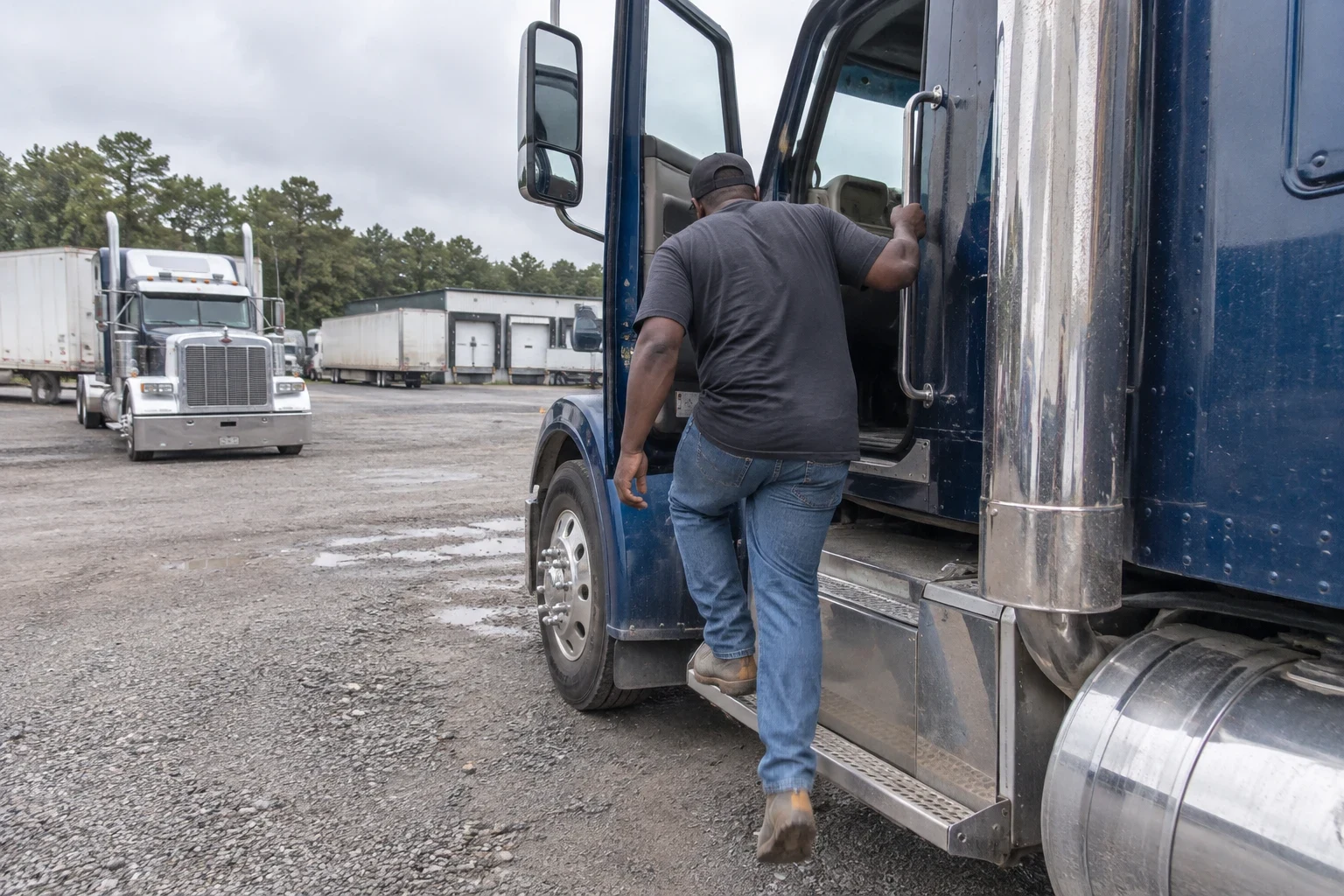
Do I Need Occupational Accident Insurance as an Owner-Operator in Union City?
Your truck policies protect the truck, the load and the public, but none of them pay you when you get hurt.
Do I need occupational accident insurance?
If you're leased onto a motor carrier, you almost certainly need it, because most lease agreements require occupational accident coverage before you can run. If you haul under your own MC authority with no employees, the law usually doesn't require it. Without it, though, an injury on the job can leave you with no income and big medical bills.
What occupational accident insurance covers
Occupational accident insurance pays you when you get hurt while working. Think of it as a stripped-down stand-in for workers' comp, built for people who run their own trucks and don't qualify as anyone's employee.
Most policies bundle a few benefits together. The exact limits are set by each policy, so two plans that look alike on a lease checklist can pay out very differently.
It does not cover your truck, your trailer, the freight or anyone else you hurt. Those belong to other policies.
- Medical bills from an on-the-job injury
- Weekly disability pay while you can't drive
- Accidental death benefit for your survivors
- Payments for loss of a limb, sight or hearing
Who usually has to carry it
The most common reason drivers buy it is a lease. When you sign on with a carrier as an independent contractor, the carrier isn't putting you on its workers' comp. To protect both sides, the lease usually requires you to show occupational accident coverage with set minimum limits.
Drivers with their own DOT number and MC authority are in a different spot. Federal filings don't ask for it, and the shippers and brokers you work with generally won't either. The choice is yours, and so is the risk.
Read your lease before you shop. It tells you the minimum benefits you need, and some carriers want to be listed as a certificate holder so they get notice if the policy lapses.
How it differs from workers' comp and health insurance
Workers' comp is set up by state law and covers employees. In Georgia, a business owner or independent contractor generally isn't covered unless they set it up for themselves, and many owner-operators find that route costly or hard to get. Occupational accident is a private policy with fixed benefit amounts instead.
Your personal health plan is another gap to check. Some health plans exclude injuries that happen at work, and even when they pay, they don't replace the money you lose while the truck sits. A fall off a trailer deck or a strained back at a loading dock can keep you out of the seat for weeks.
If you run a small fleet with hired drivers, those employees are a separate question. Talk to your agent about workers' comp for them; occupational accident is mainly for you as the owner.
How it fits with the rest of your truck coverage
It helps to see each policy as covering one thing. Primary auto liability pays for damage and injuries you cause to others. Physical damage insurance fixes or replaces your truck. Motor truck cargo coverage pays for the load. Non-trucking liability, also called bobtail insurance, covers you when you're driving the truck off dispatch.
None of those pay for your own injury, which is the hole occupational accident fills. When we put together a quote for your trucks, we lay it out in writing: what each policy covers, the limits, what moves the premium, and where gaps remain. That way you know exactly what's protected and what isn't before you sign anything.
What to check before you buy a policy
Cheap coverage that pays too little or stops too soon doesn't help much. Look past the price and read the benefit schedule line by line.
- Medical limit per accident and any deductible
- Weekly disability amount and the waiting period before it starts
- How many weeks disability pays, and whether it ends at a set age
- If the policy covers you only under dispatch or off duty too
- Exclusions for illness, pre-existing conditions or off-duty activity
- That the limits meet or beat what your lease requires
More questions about occupational accident coverage
Something not covered here? (770) 790-4033
Can my carrier deduct the premium from my settlements?
Many carriers offer a group plan and take the cost out of your weekly settlement. Check the benefit limits on that plan the same way you would any other policy.
Can I carry my own policy instead of the carrier's plan?
Often, yes, as long as it meets the limits in your lease. Get the carrier's requirements in writing first, then make sure your policy matches them.
Does each team driver need their own coverage?
Usually, yes. A policy normally covers the named person, so a co-driver who is also an independent contractor needs a policy of their own.
Does it cover me if I get hurt at a truck stop or while fueling?
Many policies cover injuries while you're under dispatch, which can include fueling and loading. Off-duty injuries are often excluded unless your policy adds off-duty coverage.
See your truck coverage laid out in writing
Call and tell us how you run: leased on or under your own authority, what you haul and how many trucks. We'll go over the coverage you need and put together a written quote that spells out the limits and what drives the premium.